MINERAL PROSPECTS FOR PROMOTING GREENFIELD AREAS
Mineral Resources: Gold - Copper - Iron - Base Metals - Rare Earth Elements Minerals
IDENTIFYING THE AREA
The area being promoted has mining potential for copper prospecting, an essential raw material for use in various sectors of the manufacturing industry. It is a greenfield area, the basic work on which took place during the implementation of the National Geology Plan (PLANAGEO).
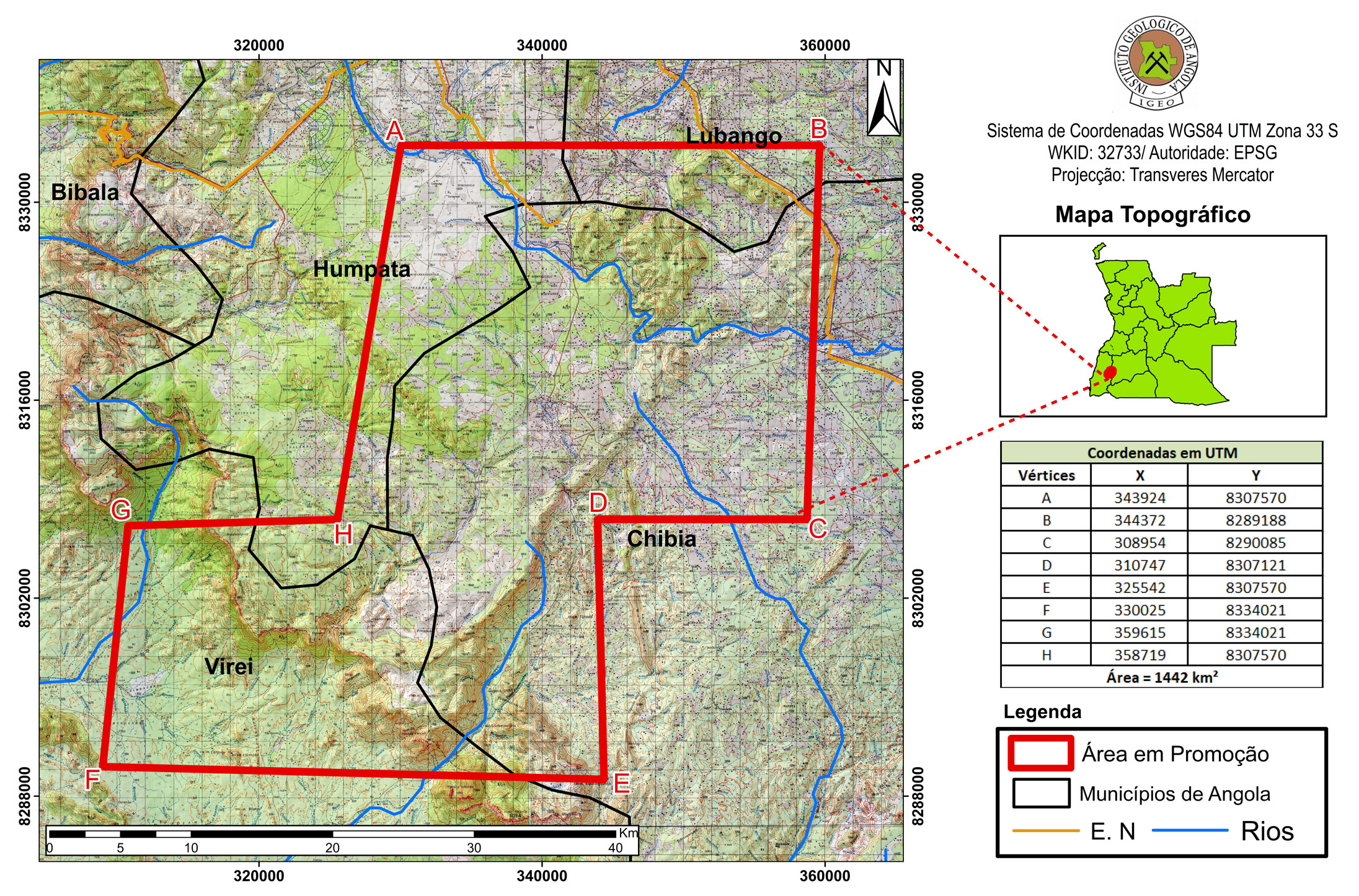
Area (Km )
1442
Municipalities
Chibia, Humpata, Lubango e Virei
Provinces
Huíla e Namibe
Mineral Resources
Cooper
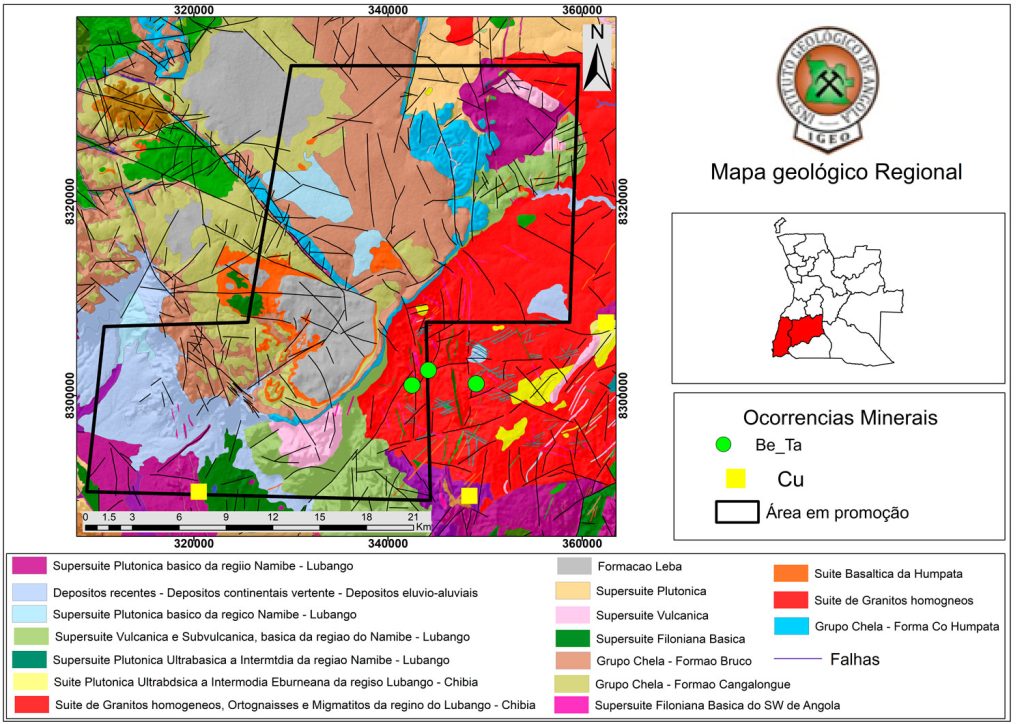
REGIONAL GEOLOGY
The area is located on Sheet SUL-D33T at a scale of 1:250,000, where the Epupa-Namibe metamorphic complex outcrops and there are frequent post-kinematic garnet crystalloblasts, growing over the schist foliation defined by biotites.
The crystals have inclusions of rutile and radioactive minerals (essentially zircon), with the formation of small pleochroic halos.
Mineral occurrences of Fe and Ti are quite numerous and are associated with the erosion of the Cunene Anorthosite Complex.
In and around the area, there are potential occurrences of rocks containing Copper, Nickel, Cobalt, Chromium, Zinc and Rare Metals.
RECENT WORK AND RESULTS
The area under promotion has aero-geophysical information on magnetometry and radiometry acquired by means of flight lines with a spacing of 1,000 m and an altitude between 80 to 120 m.
This data, available from the Geological Institute of Angola, can be used as support during the development of geological-mining activities.
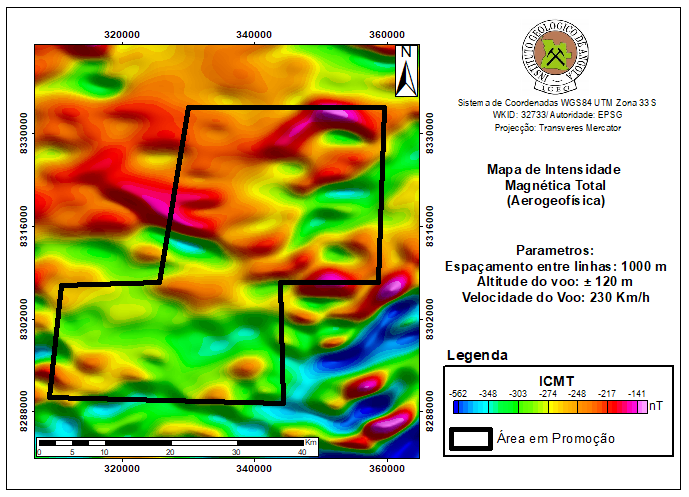
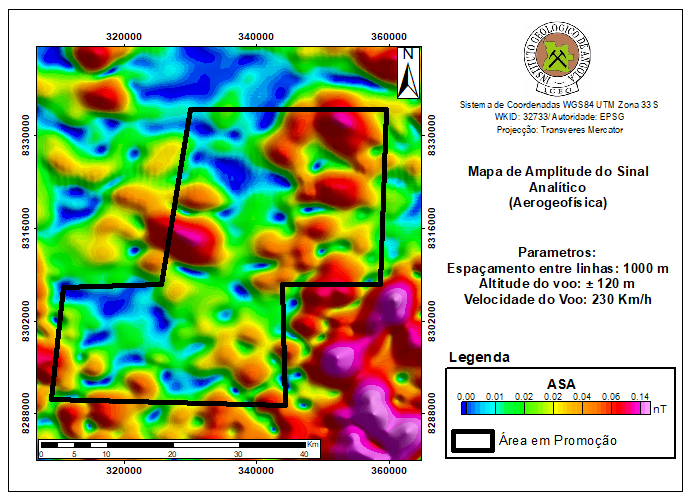
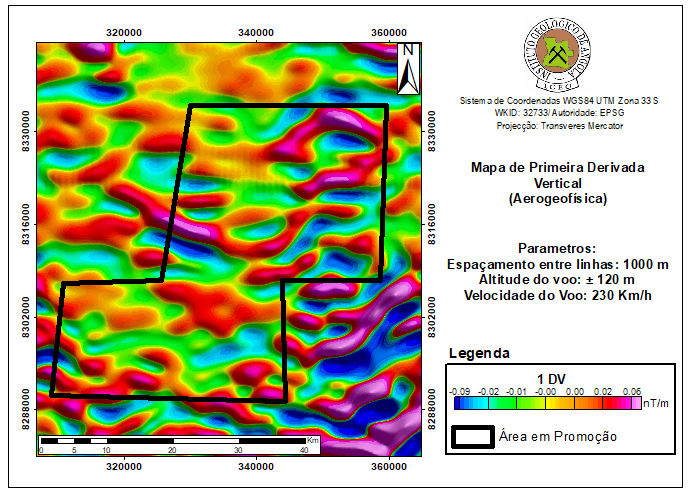
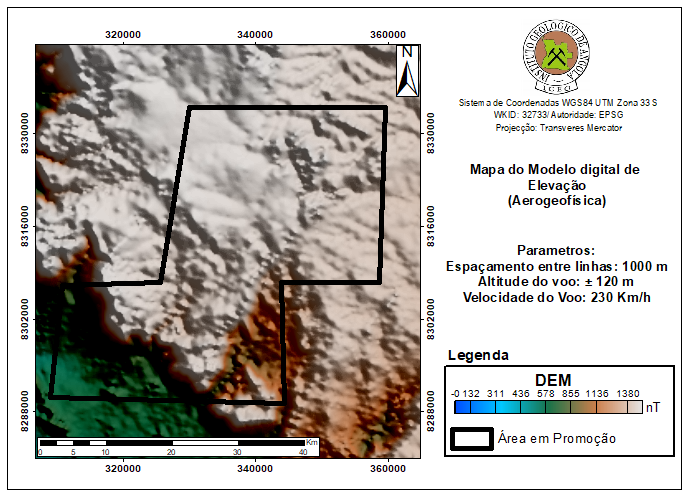
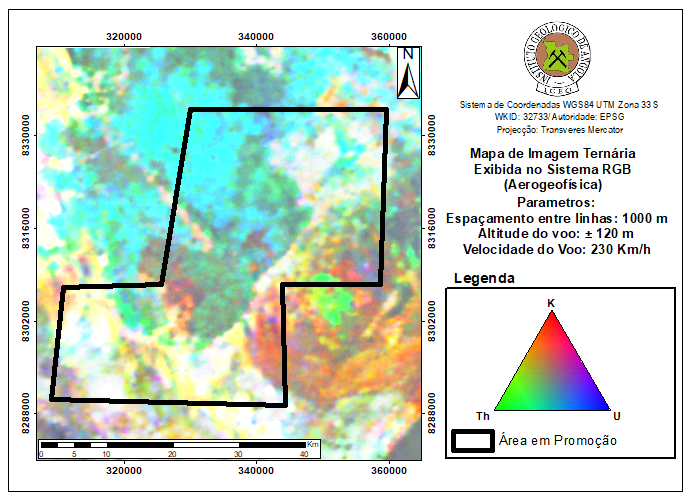
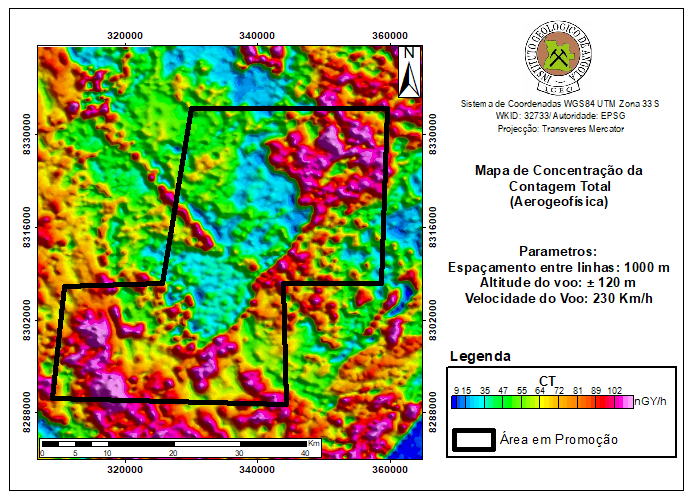
The following results were obtained:
- Airborne geophysics (magnetometry and radio- metry);
- Systematic geological mapping at a scale of 1:250,000;
- Regional geochemistry at a scale of 1:250,000;
- Various specific studies relating to areas of special geological interest.
The following maps were produced from the airborne magnetometry and gamma spectro- metry campaign:
- Map of total magnetic field strength corrected for IGRF and reduced to the pole;
- Map of derivatives (1st and 2nd vertical derivati- ves of magnetic field strength);
- Horizontal gradient in Y of the magnetic field intensity reduced to the pole. The same was done for remote sensing. Terrain elevation model (DEM);
- Regional geochemistry at a scale of 1:250,000;
- Various specific studies relating to areas of special geological interest.
- Ternary radiometric map (K, U, Th); Total count radiometric map.
INFRASTRUCTURE AND SERVICES
The region is endowed with essential infrastructure and services for the development of mining projects, such as:
- The area can be accessed via National Road 280, which connects the city of Lubango to the municipalities of Bibala and Namibe, as well as via Lubango City airport;
- The Port of Namibe, the Moçâmedes Railway and the Bibala Logistics Base can be used during all stages of geological and mining activities;
- The existence of laboratory services to support geological-mining activities, belonging to the Geological Institute of Angola, in Huíla Province;
- Electricity can be supplied from the connection to the National Electricity Transmission Network;
- Existence of financial services and solid telecommunications structures.